
Medicare guidance
Medicare Initial Enrollment Period and Coverage Start Dates
The window usually lasts seven months, but the month you apply determines when Part B and premium-Part A begin.
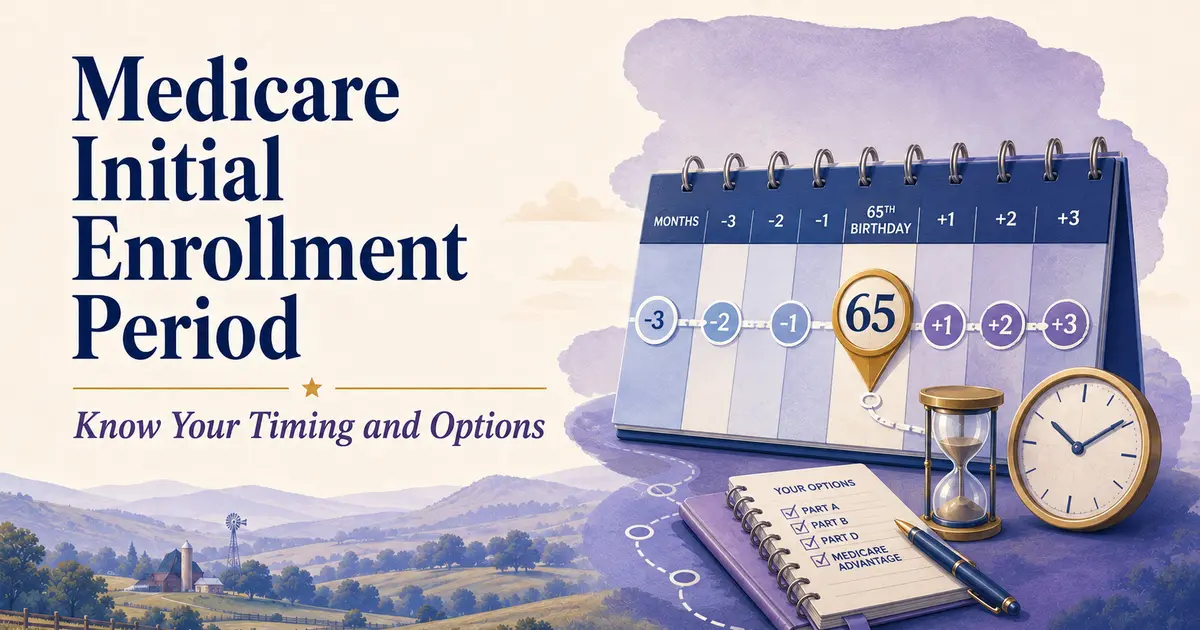
Your Initial Enrollment Period generally begins three months before the month you turn 65, includes your birthday month and ends three months afterward.
That rule describes when you may enroll. It does not mean every month produces the same effective date or that waiting is harmless.
How the Seven Months Work
| Enrollment month | Typical Part B and premium-Part A start | Planning note |
|---|---|---|
| Three months before the birthday month | First day of the birthday month | Best margin for processing and plan comparison. |
| Two months before | First day of the birthday month | Still allows time to coordinate other coverage. |
| One month before | First day of the birthday month | Confirm cards and private-plan deadlines promptly. |
| Birthday month | Generally first day of the following month | Coverage may begin later than expected. |
| One to three months after | Generally first day of the month after enrollment | A delay can create a coverage gap. |
Premium-free Part A can follow different retroactive rules, especially when someone applies after age 65. HSA contributors should review the Medicare and HSA rules before applying.
What If Your Birthday Is on the First?
If your 65th birthday is on the first day of a month, Medicare generally treats you as reaching age 65 during the previous month. The enrollment window and coverage start shift one month earlier.
A person born October 1 generally follows a September Medicare start timeline. Do not coordinate an employer or Marketplace plan around October 1 without checking the official effective date.
When Another Enrollment Period May Apply
Current-employment coverage
You may qualify for a Part B Special Enrollment Period while covered through your or your spouse’s current employment and for a limited period afterward.
Review the Part B SEP →Missed the IEP
If no SEP applies, the General Enrollment Period may be the next opportunity. A late penalty can still apply.
Review the penalty and GEP →Medicare before 65
People already enrolled because of disability generally do not restart Parts A and B at age 65, but new Medigap rights may begin.
Already on Medicare before 65? →ESRD, ALS or exceptional circumstances
Different eligibility, effective-date or Special Enrollment rules may apply. Confirm directly with Social Security or Medicare.
Three Dates to Verify Separately
- Your official Part A effective date.
- Your official Part B effective date.
- The start date of Medicare Advantage, Part D or Medigap coverage that follows.
These dates can interact, but they are not interchangeable. Use the Parts A and B enrollment guide for the application steps.
Frequently Asked Questions
Does my Initial Enrollment Period begin on my birthday?
No. It usually begins three months before the month you turn 65.
Will Part B always start the month I turn 65?
No. Applying during or after the birthday month generally produces a later start date.
Does the seven-month window apply if I keep working?
The IEP still exists, but qualifying current-employment coverage may support a later Part B Special Enrollment Period.
Can I choose a retroactive Part B date?
Part B effective dates follow enrollment rules and Social Security’s determination. Do not assume retroactive coverage will fill a gap.
When can I join a Medicare Advantage or Part D plan?
Private-plan enrollment has its own periods and generally depends on the Parts A and B dates. Confirm the plan election before the applicable window closes.
Sources and Enrollment Resources
Independent Medicare guidance
Confirm the Start Date Before Other Coverage Ends
We can help you organize the private-plan decisions around your Medicare dates and identify the questions to take to Social Security, an employer or another agency.
Thompson Medicare Brokerage is not connected with or endorsed by the U.S. government or the federal Medicare program. This page provides general educational information. Social Security or the Railroad Retirement Board makes official Medicare Parts A and B enrollment, effective-date and penalty decisions. Employer, Marketplace and tax consequences depend on individual circumstances.