
Medicare guidance
Medicare Part B Special Enrollment Period: CMS-40B and CMS-L564
The working-aged SEP is tied to group health coverage based on current employment—not simply to having insurance after age 65.
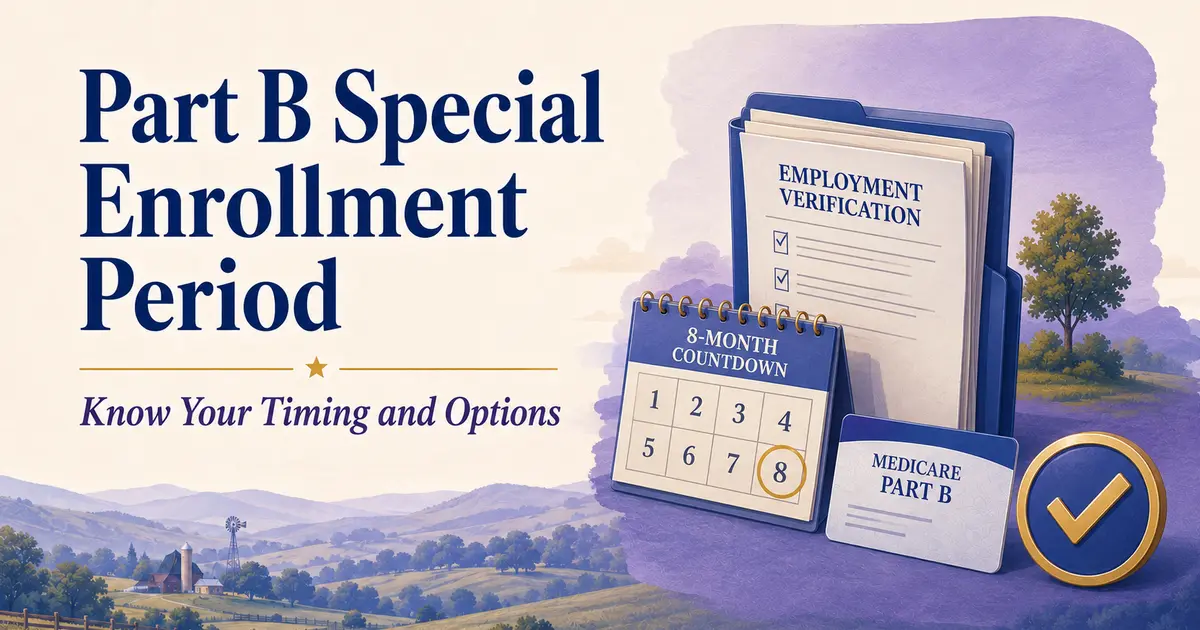
You can generally enroll in Part B while covered by a group health plan based on your or your spouse’s current employment, or during the eight-month period that begins when the employment or that coverage ends, whichever happens first.
This is a Parts A and B enrollment rule. It is different from Medicare Advantage and Part D Special Enrollment Periods created by moves, plan terminations, Medicaid changes and other events. Use the general Medicare Special Enrollment Period guide to route those plan-change questions.
COBRA and retiree coverage do not extend this current-employment SEP. Waiting for either to end can leave the eight-month window behind you.
What CMS-40B and CMS-L564 Do
CMS-40B
The Application for Enrollment in Medicare Part B is used when you already have Part A and want to add Part B. Follow Social Security’s instructions for requesting an effective month.
CMS-L564
The Request for Employment Information documents the employment and group health plan coverage that support the SEP. You complete your section and the employer generally completes its section.
Social Security decides SEP eligibility, the acceptable evidence and the effective date.
Exceptional Conditions: Find the Correct Part A or Part B Application
If an exceptional situation caused you to miss a Part B or premium Part A enrollment period, ask Social Security whether an exceptional-conditions Special Enrollment Period applies. Examples include certain declared disasters, employer or health-plan misrepresentation, release from incarceration and loss of Medicaid. CMS-10797 is the exceptional-conditions application. Its current instructions direct you to mail or fax the signed form and supporting information to your local Social Security office. Use the official SSA office locator to confirm the destination. Deadlines, evidence and coverage start dates depend on the event; the standard working-after-65 SEP uses a different form route. Railroad beneficiaries should confirm routing with RRB.
When the SEP Begins and Why Waiting Is Risky
The SEP generally continues while qualifying current-employment coverage remains active and for eight months after employment or the group plan ends, whichever occurs first. The clock can start even while COBRA continues.
Eight months for Part B does not mean eight months for Medicare Advantage, Part D, Medigap or a spouse’s replacement coverage. Arrange the transition before the employer plan ends whenever possible.
Read the full COBRA and Medicare guide before waiting for continuation coverage to end.
What to Gather Before Retirement
- Exact employment start and end dates.
- Exact group health coverage start and end dates.
- Proof the plan was based on current employment.
- Completed CMS-L564 or alternate evidence Social Security accepts.
- CMS-40B or the online Part B SEP application.
- The requested Part B start month and the employer-plan end date.
- Copies and confirmation of everything submitted.
If an employer is unavailable or refuses to complete CMS-L564, contact Social Security about secondary evidence rather than abandoning the application.
Coordinate Part B With the Private Coverage Window
Once the Part B date is established, compare Medicare Advantage or Original Medicare with Medigap and Part D. Your Medigap Open Enrollment Period generally begins when you are 65 or older and Part B starts. Follow the complete retiring-after-65 transition guide.
Frequently Asked Questions
How long is the Part B Special Enrollment Period after work ends?
It generally lasts eight months after the employment or qualifying group coverage ends, whichever happens first.
Does COBRA extend the eight-month Part B SEP?
No. COBRA is not coverage based on current employment and does not restart or extend that SEP.
Do I need both CMS-40B and CMS-L564?
A Part B SEP applicant using paper forms commonly submits both. Social Security determines the exact forms and evidence required.
What if my former employer will not complete CMS-L564?
Contact Social Security about alternate evidence such as pay records, insurance cards or other coverage documentation.
Can I wait eight months to choose Part D or Medicare Advantage?
That is risky. Private-plan enrollment periods can close earlier than the Part B SEP.
Sources and Enrollment Resources
Independent Medicare guidance
Coordinate Part B Before the Employer Plan Ends
Benjamin Thompson can help organize the private-plan timeline and the questions to take to Social Security and the employer benefits administrator.
Thompson Medicare Brokerage is not connected with or endorsed by the U.S. government or the federal Medicare program. This page provides general educational information. Social Security or the Railroad Retirement Board makes official Medicare Parts A and B enrollment, effective-date and penalty decisions. Employer, Marketplace and tax consequences depend on individual circumstances.