
Original Medicare guide
Medicare Part A Work Credits: How 40 Quarters and Premium-Free Part A Work
Medicare Part A is premium-free for most people because they—or in many cases a spouse—have enough Medicare-covered work history. This guide explains the 40-credit rule, how credits are earned, what happens with fewer than 40 credits, and when a monthly Part A premium can apply.
The basic rule
What Are Medicare Part A Work Credits?
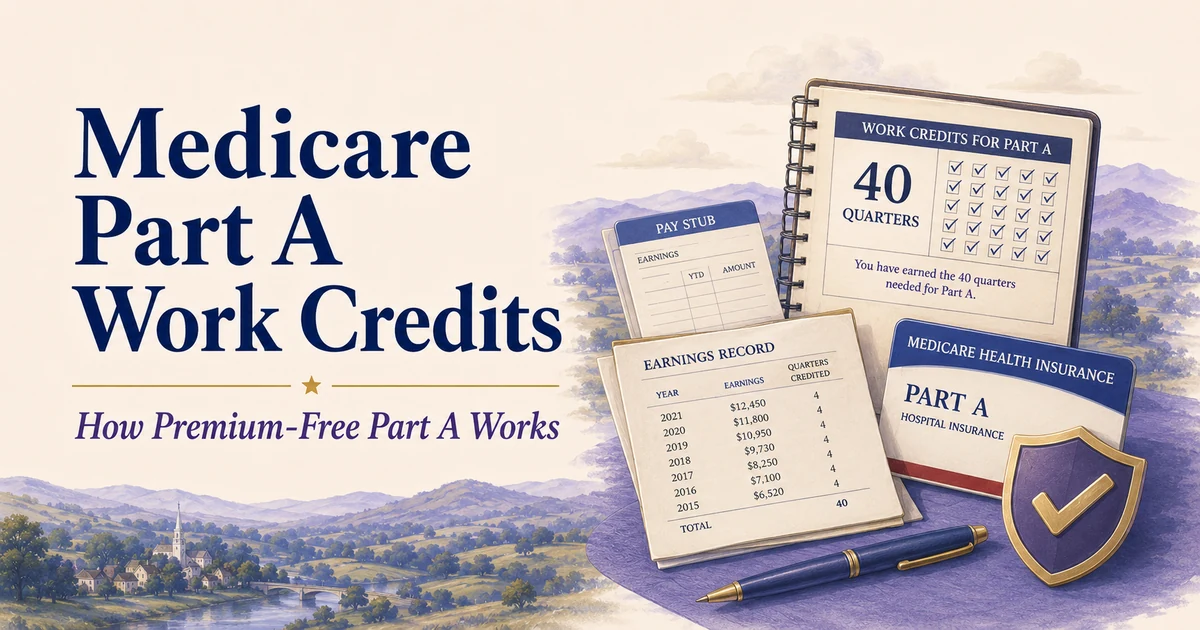
Social Security uses quarters of coverage, commonly called Social Security or Medicare work credits, to determine whether a worker has enough covered work history for certain benefits. For premium-free Part A at age 65, the familiar benchmark is generally 40 credits.
40 credits
This is the usual threshold for premium-free Part A based on your own work record.
Up to 4 per year
You can earn no more than four credits in one calendar year, even if your earnings are much higher.
Years do not have to be consecutive
The credits are based on covered earnings over your work history. The work does not have to be one uninterrupted 10-year stretch.
2026 earnings threshold
How Do You Earn a Medicare Work Credit?
For 2026, you earn one Social Security and Medicare credit for each $1,890 of covered earnings, up to four credits for the year. That means $7,560 of covered earnings in 2026 is enough to earn the year’s maximum four credits.
The word “quarter” can be misleading. Since 1978, credits are based on your total covered earnings for the year. You do not have to earn a specific amount in each three-month calendar quarter.
The dollar amount required for one credit changes over time, so someone who worked decades ago did not need to earn today’s dollar amount for an older credit.
Premium-free eligibility
Do You Need 40 Credits of Your Own?
Not always. Medicare says Part A can be premium-free when you or a spouse paid Medicare taxes long enough while working. Social Security also recognizes some eligibility through a former or deceased spouse’s work record when its relationship requirements are met.
Your own work record
If you have at least 40 qualifying credits on your own record, you generally meet the work-history requirement for premium-free Part A at 65.
A spouse or former spouse’s record
A current spouse, deceased spouse or former spouse’s covered work can sometimes qualify you even when your own record has fewer than 40 credits. The exact marital-duration and status rules are determined by Social Security.
If you are unsure which record applies, Social Security—not an insurance company—makes the official Part A entitlement and premium determination.
If you have fewer credits
What If You Do Not Qualify for Premium-Free Part A?
Many people age 65 or older who do not qualify for premium-free Part A can buy it. The monthly premium depends on Medicare-covered work history.
| Work history | 2026 Part A premium | What it means |
|---|---|---|
| 40 or more quarters | $0 | Usually premium-free Part A. |
| 30–39 quarters | $311/month | Reduced Part A buy-in premium. |
| Fewer than 30 quarters | $565/month | Full Part A buy-in premium. |
For age-based Medicare, Medicare.gov states that if you need to buy Part A, you also have to enroll in Part B. A Part B premium applies separately.
Premium-free does not mean cost-free. Even when your Part A premium is $0, Part A deductibles and coinsurance can still apply when you use covered hospital or skilled nursing services. See Medicare Part A Coverage and Costs for those benefit rules.
If Part A or Part B premiums are difficult to afford, the Missouri Medicare and Medicaid guide explains full MO HealthNet and Medicare Savings Programs, including QMB help with applicable Part A premiums. Missouri determines whether you qualify.
Common confusion
Do Work Credits Change What Part A Covers?
No. Work credits primarily determine entitlement and premium status; they do not create a richer Part A benefit package. Having 42, 60 or 100 credits does not make Part A cover more hospital days than having 40 credits.
That distinction is why this page is separate from our Part A coverage and costs guide. This guide answers “Do I qualify for premium-free Part A, and what if I do not?” The other guide answers “What does Part A cover, and what can I owe when I use it?”
Planning before 65
What If You Are Close to 40 Credits?
If your Social Security record shows fewer than 40 credits, additional Medicare-covered work can add credits over time, up to four per year. Once new covered earnings are posted, Social Security can determine whether your Part A premium category has changed.
- Check your earnings history in your my Social Security account.
- Make sure years of covered employment are not missing from the record.
- If a spouse’s record may qualify you, ask Social Security which record will be used.
- If you expect to buy Part A, budget for Part B as well and verify your enrollment window.
Other Medicare paths
What If Medicare Starts Before Age 65?
Medicare before 65 can begin through disability entitlement, ALS or ESRD, and those pathways do not fit neatly into the ordinary age-65 “40 work credits for premium-free Part A” explanation. If that is your situation, start with Medicare Under 65: Disability, SSDI, ALS and ESRD.
Likewise, if you are still working past 65 and contribute to an HSA, do not use work credits alone to decide when to enroll. Premium-free Part A can affect HSA contribution eligibility, and delayed Part A enrollment can have retroactive effective-date consequences. See Medicare and HSA Rules.
Frequently asked questions
Medicare Part A Work Credit Questions
Are 40 quarters the same as 10 years of work?
Generally, 40 credits takes at least 10 years because you can earn no more than four credits per year. The years do not have to be consecutive.
How much do I have to earn for one work credit in 2026?
In 2026, one credit is earned for each $1,890 in covered earnings, up to four credits for the year. Earning $7,560 in covered earnings is enough for all four 2026 credits.
Can my spouse’s work credits give me premium-free Part A?
Yes, in many situations. Medicare says premium-free Part A can be based on your or your spouse’s Medicare-taxed work. Social Security applies the exact relationship rules.
Can an ex-spouse’s work record count?
It can in qualifying situations. Former-spouse rules depend on factors such as the length of the marriage and other Social Security requirements, so ask Social Security to determine eligibility on the correct record.
What if I have 35 credits?
For 2026, people with 30–39 quarters of coverage can qualify for the reduced Part A premium of $311 per month rather than the full $565 premium.
Is premium-free Part A completely free?
No. “Premium-free” means there is no monthly Part A premium. Deductibles and coinsurance can still apply when you receive covered Part A services.
Where can I see how many credits I have?
Your Social Security earnings record and benefit information are available through your my Social Security account. If the record looks incomplete, contact Social Security before relying on the total.
Related articles
More Enrollment and Cost Guidance
Primary references
Official Sources
- Social Security: Quarter of Coverage
- Social Security: Parts of Medicare
- Medicare.gov: 2026 Medicare Costs
- CMS: 2026 Medicare Parts A and B Premiums and Deductibles
Reviewed against official sources on August 23, 2026. Medicare and Social Security rules and annual dollar amounts can change; verify current requirements before acting.
Independent Medicare guidance
Know Your Part A Status Before You Compare Coverage
Social Security determines whether your Part A is premium-free or purchased. Once that status is clear, Thompson Medicare Brokerage can help you compare the Medicare insurance options we represent around your doctors, prescriptions, budget and coverage priorities.
Thompson Medicare Brokerage is not connected with or endorsed by the U.S. government or the federal Medicare program. This page provides general educational information. Social Security or the Railroad Retirement Board makes official Medicare Part A entitlement, premium and enrollment determinations. Annual Medicare premiums and Social Security credit thresholds can change.