
2026 Medicare drug costs
Medicare Part D Costs in 2026: Deductible, Copays and the $2,100 Cap
The $615 maximum deductible and $2,100 annual covered-drug cap are important protections, but they do not replace a medication-by-medication plan comparison.
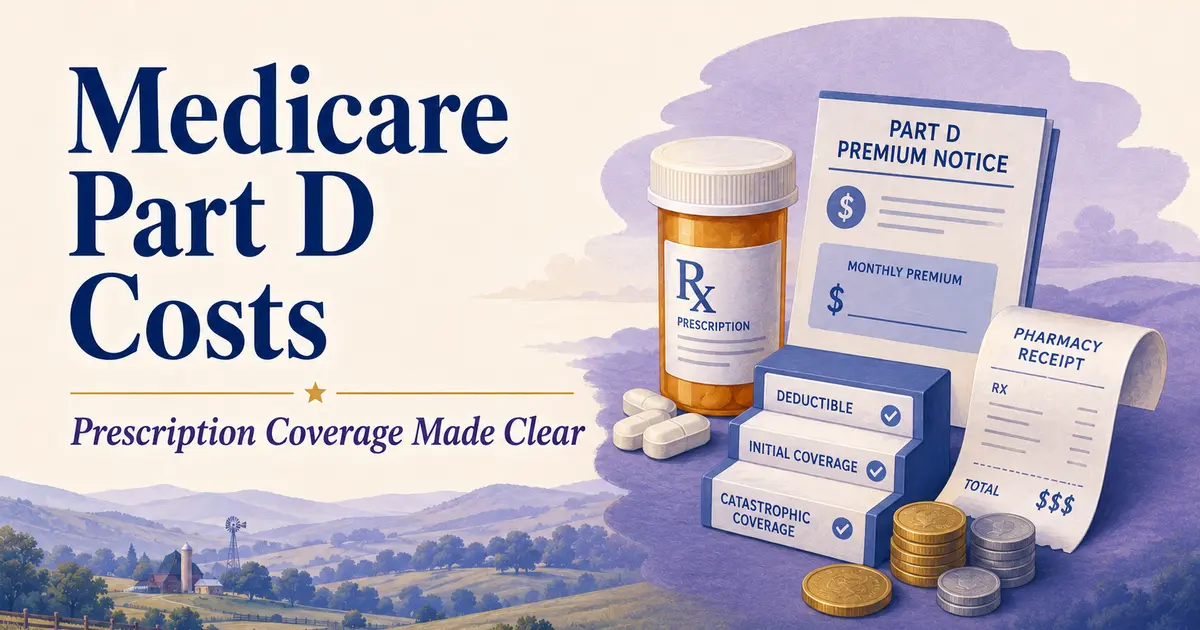
Quick answer: In 2026, no Medicare Part D plan may have a deductible higher than $615. After qualifying out-of-pocket spending for covered Part D drugs reaches $2,100, the member pays $0 for covered Part D drugs for the rest of the calendar year. Premiums and many non-covered purchases do not count toward that cap.
What Can Make Up Your Total Part D Cost?
Monthly premium
The plan’s premium varies. A separate Part D income-related adjustment may also apply based on income, even when drug coverage is included in a Medicare Advantage plan.
Annual deductible
The plan may require you to pay certain covered-drug costs before its ordinary cost sharing begins. The 2026 maximum is $615, but plans may charge less or exempt selected tiers.
Copayments or coinsurance
Plans can assign a fixed copayment or a percentage of the drug’s negotiated price. A higher tier or non-preferred pharmacy commonly increases the member’s share.
Non-covered spending
Cash purchases, non-formulary drugs without an approved exception and medications bought outside the United States may not receive Part D treatment or count toward the annual limit.
Looking ahead to next year? These figures apply to 2026. Use the 2027 Medicare changes guide for confirmed 2027 information and items still awaiting verification.
How Does Part D Progress During the Year?
| Stage | What happens | What to verify |
|---|---|---|
| Deductible | You pay plan-defined covered costs until the deductible is satisfied, when the drug is subject to it. | Whether the plan has a deductible and which tiers apply before it. |
| Initial coverage | The standard benefit uses 25% member coinsurance, but actual plans may offer copayments, different coinsurance or enhanced coverage. | The tier, pharmacy and plan-specific cost-sharing amount for each drug. |
| Catastrophic coverage | After qualifying spending reaches $2,100 in 2026, you pay $0 for covered Part D drugs for the rest of the calendar year. | Which payments count and whether the medication is being processed as covered Part D. |
The old coverage gap or “donut hole” is no longer a separate member-cost phase. The practical questions are now the deductible, initial cost sharing and when qualifying out-of-pocket spending reaches the annual threshold.
Insulin and Recommended Adult Vaccines Follow Different Cost Rules
Covered insulin
The Part D deductible does not apply to covered insulin products. For a one-month supply in 2026, your cost cannot exceed the lowest applicable amount among $35, 25% of the maximum fair price when the insulin is a selected drug under Medicare’s Drug Price Negotiation Program, or 25% of the plan’s negotiated price. A plan may charge less.
Recommended adult vaccines
Part D-covered adult vaccines recommended by the Advisory Committee on Immunization Practices (ACIP) have no deductible and $0 beneficiary cost sharing when covered under Part D and administered in accordance with the recommendation.
These protections are separate from the ordinary deductible and tier structure. Do not assume an insulin or recommended adult vaccine follows the same cost-sharing rule as another drug on the same formulary tier.
Which Expenses Move You Toward the $2,100 Cap?
Amounts you pay for covered Part D drugs generally count, along with certain payments made on your behalf, including qualifying Extra Help payments. The plan tracks this true out-of-pocket spending.
Generally counts
- Your deductible for covered Part D drugs
- Your copayments or coinsurance for covered Part D drugs
- Certain qualifying payments made by other programs or people
Generally does not count
- Monthly plan premiums or Part D IRMAA
- Drugs that are not covered under Part D
- Cash or discount-card purchases processed outside the plan
- Part B-covered medical drugs
A drug obtained through the Medicare GLP-1 Bridge uses special rules: the $50 Bridge payment does not count toward the Part D deductible or annual out-of-pocket cap.
Does the Medicare Prescription Payment Plan Reduce These Costs?
No. The Medicare Prescription Payment Plan changes when you pay qualifying out-of-pocket drug costs. Instead of paying the pharmacy, you receive bills from the plan that spread those costs over the remaining months of the calendar year.
Spreading is not saving. The payment option does not lower the deductible, drug price, premium or annual cap. It may make a high early-year prescription easier to budget.
Why a Low Premium Can Still Produce a High Total Cost
A low-premium plan may place one medication on a higher tier, use coinsurance for specialty drugs or treat your preferred local pharmacy as standard rather than preferred. Another plan may cost more each month but reduce the expected annual prescription total.
- Enter every prescription with the exact dosage, quantity and frequency.
- Add the pharmacies you can realistically use.
- Review the projected yearly drug and premium total.
- Check restrictions and what happens before the deductible.
- Review the plan again each year because pricing and formularies can change.
2026 Part D Cost Questions
Is every Part D deductible $615 in 2026?
No. $615 is the maximum allowed deductible. Some plans charge less, have no deductible or cover selected tiers before the deductible is met. The deductible also does not apply to covered insulin products or qualifying ACIP-recommended adult vaccines.
How much can covered insulin cost in 2026?
For a one-month supply of a covered insulin product, the 2026 Part D cost cannot exceed the lowest applicable amount among $35, 25% of the Medicare-negotiated maximum fair price when one applies, or 25% of the plan’s negotiated price. A plan may charge less, and the Part D deductible does not apply to covered insulin.
Do I pay for Part D-covered adult vaccines?
Part D-covered adult vaccines recommended by ACIP have no deductible and $0 beneficiary cost sharing when administered in accordance with the recommendation.
Do premiums count toward the $2,100 cap?
No. The annual cap applies to qualifying out-of-pocket spending for covered Part D drugs, not monthly premiums or Part D IRMAA.
Do cash purchases count toward the cap?
Usually not when the purchase is processed outside the Part D plan. Ask the pharmacy to clarify whether the claim is being submitted through the plan before paying.
What happens after I reach $2,100?
You pay $0 for covered Part D drugs for the rest of the calendar year. The limit resets with the new calendar year.
Does every drug cost 25% after the deductible?
The standard benefit uses 25% coinsurance, but actual plans may provide tiered copayments, different coinsurance or enhanced benefits. Special rules apply to covered insulin products and qualifying recommended adult vaccines. Check the plan and pharmacy for the specific prescription.
More Medicare guidance
Related Articles
Independent Medicare guidance
Compare Part D Coverage Using Your Actual Prescriptions
Thompson Medicare Brokerage helps people in Missouri and Illinois compare the Medicare plans we represent using their medications, dosages, pharmacies and expected yearly costs. Consultations are no-cost and no-obligation.
Thompson Medicare Brokerage is a non-government insurance agency. This page provides general educational information and is not medical advice. Plan availability, formularies, pharmacy networks, premiums, cost sharing, restrictions and enrollment rights vary by plan, location and year. Check current plan documents and official Medicare information.