
Medicare guidance
Medicare and the 20-Employee Rule: Who Pays First?
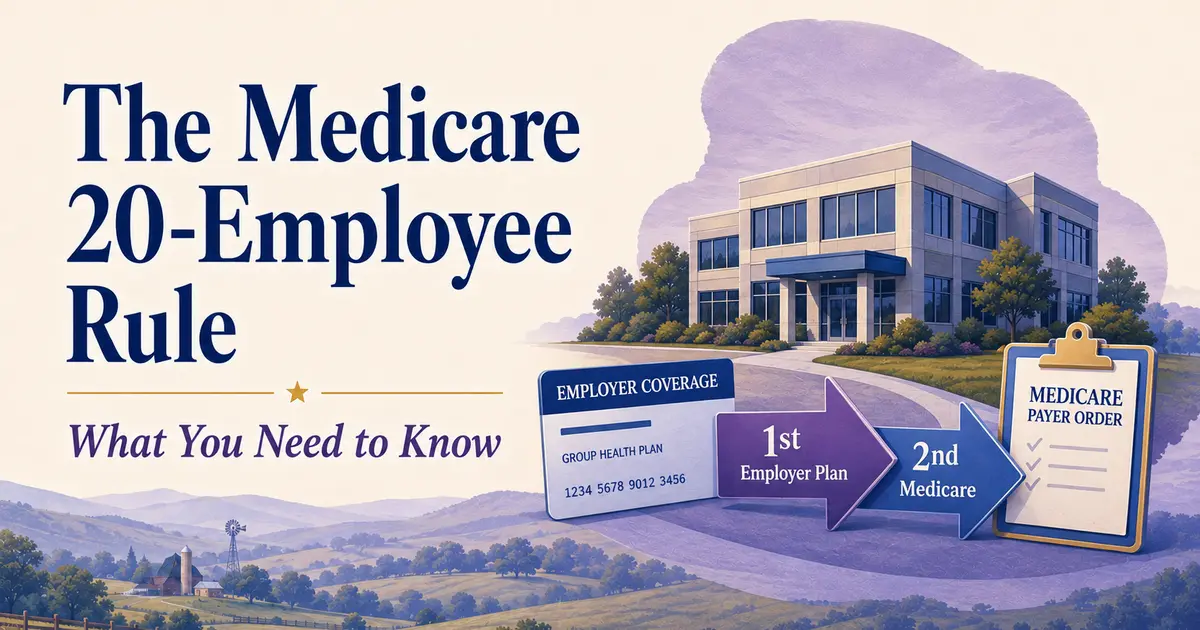
At age 65, an employer with 20 or more employees generally leaves the active group plan primary; fewer than 20 generally makes Medicare primary.
Self-employed or buying your own policy? Check which coverage counts when you are self-employed.
If you are 65 or older and covered through your or your spouse’s current employment, a group plan from an employer with 20 or more employees generally pays first. If the employer has fewer than 20, Medicare generally pays first.
The rule is about payer order. It does not by itself decide whether staying on the employer plan is affordable or whether the coverage is based on current employment.
Compare the Two Common Situations
| Age-65 situation | Who generally pays first? | What to verify |
|---|---|---|
| Current-employment group coverage; employer has 20 or more employees | Employer plan | Whether you can delay Part B, drug coverage is creditable and HSA contributions will continue. |
| Current-employment group coverage; employer has fewer than 20 employees | Medicare | Whether Parts A and B are required for the employer plan to pay correctly. |
| COBRA or retiree coverage | Medicare generally pays first | These are not current-employment coverage and do not preserve the working-aged Part B SEP. |
Different thresholds can apply for disability Medicare, and ESRD follows separate coordination-period rules.
Why “We Have About 20 People” Is Not Enough
Common ownership, affiliated companies, multi-employer plans and plan rules can affect the count. Ask the benefits administrator and insurer for the official Medicare coordination answer in writing.
- Is the coverage based on current employment?
- What employee count is used for Medicare coordination?
- Which plan pays first after Medicare eligibility begins?
- Will the employer plan reduce claims as though Medicare paid first?
- Is Part D creditable coverage documented?
- What happens to spouse and dependent coverage?
Permission to Delay Does Not Mean Delaying Is Best
Compare the full employer premium—including dependent costs—with Part B and the private Medicare coverage you would choose. Also compare deductibles, out-of-pocket exposure, doctors, prescriptions and employer HSA contributions.
Use Can I Delay Medicare If I’m Still Working Past 65? for the full decision and Medicare and HSA Rules before taking premium-free Part A.
The Employee Rule Does Not Follow You Into COBRA
When active employment or its group coverage ends, the Part B SEP clock generally begins even if COBRA follows. Review the CMS-40B and CMS-L564 Part B SEP forms and deadlines before retirement.
Frequently Asked Questions
What happens if the employer has exactly 20 employees?
For age-based Medicare, current-employment group coverage from an employer with 20 or more employees generally pays first. Confirm the official count.
Does the rule apply to my spouse’s employer coverage?
Yes, qualifying coverage based on a spouse’s current employment can be relevant. The employer size and payer order still must be confirmed.
Can a small employer tell me I do not need Part B?
Do not rely on an informal answer. If Medicare should pay first, failing to enroll can leave claims unpaid.
Does COBRA count as large-employer coverage?
No. COBRA is continuation coverage, not group coverage based on current employment.
Is the threshold always 20 employees?
No. Disability Medicare commonly uses a 100-employee threshold, and ESRD follows separate rules.
More Medicare guidance
Related Articles
Sources and Enrollment Resources
Independent Medicare guidance
Verify the Payer Order Before Declining Part B
We can help you compare the private Medicare coverage choices, while the employer plan and Medicare confirm the official coordination rule.
Thompson Medicare Brokerage is not connected with or endorsed by the U.S. government or the federal Medicare program. This page provides general educational information. Social Security or the Railroad Retirement Board makes official Medicare Parts A and B enrollment, effective-date and penalty decisions. Employer, Marketplace and tax consequences depend on individual circumstances.