
Diabetes and Medicare
Medicare Diabetes Coverage: Insulin, CGMs, Pumps and Supplies
Medicare diabetes coverage can split across Part B and Part D depending on the device, how insulin is delivered, where a drug is obtained and whether equipment qualifies as durable medical equipment. The biggest practical mistake is assuming every diabetes item runs through the same benefit.
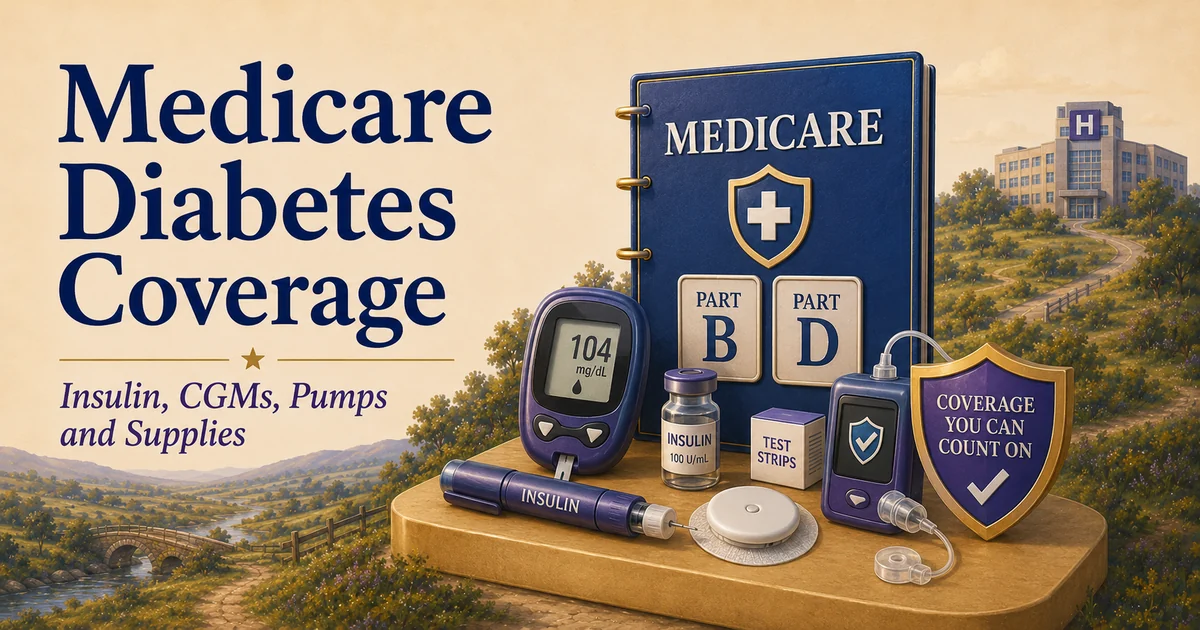
Quick answer: Medicare Part B commonly covers qualifying blood glucose monitors, test strips and lancets, continuous glucose monitors, durable external insulin pumps and the insulin used with a covered durable pump. Medicare Part D commonly handles insulin you inject yourself, insulin used with many disposable or patch pumps, injection supplies and outpatient diabetes medicines. A one-month supply of each covered Part B- or Part D-covered insulin product costs no more than $35, and the deductible does not apply to covered insulin. The exact device, supplier, drug formulary and plan rules still matter.
Part B or Part D?
Why Can the Same Diabetes Treatment Use Different Parts of Medicare?
Medicare does not put every diabetes item into one benefit bucket. Coverage can depend on whether an item is durable medical equipment, whether insulin is used through a Medicare-covered durable pump, whether the medication is self-administered and whether a pharmacy or medical-equipment supplier is furnishing the item.
That means two people with diabetes can use different Medicare benefits even if both use insulin. A person using a traditional external pump covered as durable medical equipment may receive the pump and its insulin through Part B. A person using an insulin pen or certain disposable pumps may use Part D instead.
Think item-by-item, not diagnosis-by-diagnosis. Your diabetes diagnosis does not by itself tell you whether Part B or Part D pays for a specific device, insulin product or supply.
Coverage map
Which Diabetes Items Usually Use Part B and Which Use Part D?
| Diabetes item | Typical Medicare benefit | What to verify |
|---|---|---|
| Blood glucose meter | Part B | Prescription, Medicare-enrolled DME supplier and assignment |
| Test strips, lancets and control solution | Part B | Covered quantities, medical necessity and supplier rules |
| Continuous glucose monitor and sensors | Part B when eligibility rules are met | Insulin use or qualifying hypoglycemia history, training and provider follow-up |
| Traditional durable external insulin pump | Part B | DME eligibility and approved supplier |
| Insulin used in a Part B-covered durable pump | Part B | Covered pump and insulin requirements |
| Insulin pen or needle-injected insulin | Part D | Formulary, pharmacy network and utilization rules |
| Disposable or patch pump and related insulin | Often Part D | Exact pump type and plan formulary |
| Syringes, needles, alcohol swabs and gauze for injections | Part D may cover | Plan coverage and pharmacy |
| Oral and other outpatient diabetes medicines | Part D | Formulary tier, prior authorization, step therapy and quantity limits |
| Therapeutic shoes or inserts for qualifying diabetic foot disease | Part B | Certification, ordering provider and qualified supplier |
For the broader benefit rules, see Medicare Part B Coverage and Costs and Medicare Part D Explained.
Insulin
How Does Medicare Cover Insulin in 2026?
Medicare covers insulin under either Part B or Part D depending largely on how it is delivered. Part B covers insulin when it is used with an insulin pump that Medicare covers as durable medical equipment. Part D may cover injectable insulin, inhaled insulin and insulin used with pumps that are not covered as Part B durable medical equipment, including many disposable or patch pumps.
Part B-covered pump insulin
If a durable external pump qualifies under Part B, the insulin used with that pump is generally handled under Part B rather than the drug plan.
Part D insulin
Insulin you self-administer with a pen or needle and insulin used in many non-DME pumps are generally handled through Medicare drug coverage.
Covered insulin is capped at no more than $35 for a one-month supply of each covered insulin product, and the insulin deductible does not apply. Beginning in 2026, the statutory limit can be lower than $35 for some products based on negotiated pricing rules.
The $35 ceiling applies to the insulin itself. It does not mean every pump, CGM, test strip, needle or other diabetes supply costs $35 or less.
Continuous glucose monitors
When Does Medicare Cover a CGM?
Part B may cover a continuous glucose monitor and related supplies when you have diabetes, your doctor or other qualified provider orders the device and you meet Medicare’s eligibility requirements.
Insulin or hypoglycemia history
You must take insulin or have a qualifying history of problems with low blood sugar.
Training
You or your caregiver must have enough training to use the CGM as directed.
Provider evaluation and follow-up
Your provider must evaluate your eligibility before ordering the CGM, and ongoing Medicare-required follow-up visits apply.
After the Part B deductible, Original Medicare generally leaves 20% coinsurance of the Medicare-approved amount for covered CGM equipment and supplies when the supplier accepts assignment. Medicare Advantage plans must cover at least the same Part B benefit, but they can use plan-specific DME networks, authorization processes and cost sharing.
Pumps and equipment
Why Does the Type of Insulin Pump Matter?
The phrase “insulin pump” can describe devices that Medicare treats differently. A reusable external pump that meets the durable medical equipment rules can fall under Part B. Disposable pumps that are replaced every few days and certain other pump designs may instead be covered through Part D.
- Identify the exact pump model. Do not rely on the generic word “pump.”
- Ask which Medicare benefit processes it. The supplier, prescriber and plan should be able to identify Part B DME versus Part D.
- Check the insulin separately. The insulin can follow the benefit used for the pump.
- Verify the supplier or pharmacy. A device can be covered in principle but still create problems if the supplier or pharmacy is not recognized by Medicare or the plan.
If Part B durable medical equipment is involved, supplier participation and assignment can materially affect what you owe. With Medicare Advantage, verify the exact DME vendor rather than assuming every supplier that takes the insurance company’s other products is in your plan.
Meters and testing supplies
Does Part B Cover Blood Sugar Meters, Test Strips and Lancets?
Yes. Medicare Part B covers qualifying home blood glucose monitors and related supplies as durable medical equipment. Covered supplies can include test strips, lancets, lancet holders and glucose-control solutions.
The amount Medicare covers can depend on whether you use insulin and how often testing is medically necessary. Additional supplies can sometimes be covered when your doctor documents the need and Medicare’s requirements are met.
Pharmacy counter does not always mean Part D. Some pharmacies also furnish Part B durable medical equipment. A blood-glucose testing supply can still be billed to Part B even when you pick it up at a pharmacy.
Diabetes services beyond supplies
What Other Diabetes Care Can Medicare Cover?
Diabetes self-management training
Part B covers qualifying outpatient diabetes self-management training when ordered by a doctor or other qualified provider.
Medical nutrition therapy
Part B can cover qualifying medical nutrition therapy for people with diabetes. When Medicare’s requirements are met, there is generally no cost for the covered service.
A1C and other laboratory testing
Part B can cover doctor-ordered clinical diagnostic laboratory tests used to monitor diabetes, including hemoglobin A1C testing.
Therapeutic shoes and inserts
Part B can cover therapeutic shoes or inserts for people with diabetes and severe diabetes-related foot disease when certification and supplier requirements are satisfied.
Diabetes also intersects with eye exams, foot care and preventive services. Coverage depends on the specific service and why it is being performed, so the general preventive-versus-diagnostic rules can matter.
Prescription drugs
How Should You Check Diabetes Medicines Under Part D?
Part D plans use formularies, tiers, pharmacy networks and utilization-management rules. For insulin and other diabetes drugs, confirm the exact drug name, strength, formulation, quantity and pharmacy rather than assuming all products in the same drug class are treated alike.
- Confirm the exact insulin or diabetes medication is on the formulary.
- Check whether prior authorization, step therapy or quantity limits apply.
- Compare preferred and standard network pharmacies.
- Check whether the plan covers a 30-day and extended supply differently.
- For a pump processed under Part D, verify both the device and the insulin used with it.
See Part D Formularies and Drug Tiers and Part D Prior Authorization and Step Therapy for the broader plan rules.
GLP-1 note: A GLP-1 drug used for a Medicare-coverable indication such as type 2 diabetes is evaluated under ordinary Part D coverage rules when applicable. The separate Medicare GLP-1 Bridge is a different program for qualifying weight-management use and does not replace normal Part D coverage for diabetes.
Medicare Advantage
What Changes With Medicare Advantage?
A Medicare Advantage plan must cover the Part A and Part B benefits Original Medicare covers, but the way you access those benefits can be different. Diabetes care can touch both the medical side of the plan and the Part D side, so it is worth checking each separately.
Medical and DME side
Check endocrinologists, primary care, DME suppliers, CGM vendors, pump suppliers, laboratory services and any plan authorization rules.
Drug and pharmacy side
Check insulin, oral drugs, GLP-1s and other prescriptions on the formulary, along with the exact pharmacy network and restrictions.
A plan can be strong for one half of that equation and weak for the other. For the overall coverage-structure decision, see Original Medicare vs. Medicare Advantage.
Plan comparison checklist
What Should a Person With Diabetes Verify Before Choosing a Medicare Plan?
- List every diabetes medication exactly. Include insulin name, strength, formulation and refill frequency.
- List every device. Include the exact CGM, pump, meter and required supplies.
- Separate Part B from Part D items. Know which benefit processes each item before comparing plan costs.
- Verify DME suppliers. Especially for CGMs, pumps and testing supplies.
- Verify pharmacies. Include more than one workable network option when possible.
- Check utilization rules. Prior authorization, step therapy and quantity limits can matter even when the item is technically covered.
- Compare the full year. Include premiums, medical cost sharing, drug costs and equipment/supply costs rather than focusing on one copay.
Frequently asked questions
Medicare Diabetes Coverage Questions
Does Medicare cover insulin?
Yes. Part B covers insulin used with a qualifying Part B-covered durable insulin pump. Part D may cover insulin you inject yourself, inhaled insulin and insulin used with pumps that are not covered as Part B durable medical equipment.
Is every covered insulin $35 per month?
The cost of a one-month supply of each covered Part B- or Part D-covered insulin product is capped at no more than $35, and the insulin deductible does not apply. The actual amount can be lower.
Does Medicare cover continuous glucose monitors?
Part B may cover a CGM and related supplies if you have diabetes, take insulin or have a qualifying history of hypoglycemia, have been trained to use the device and meet the provider evaluation and follow-up requirements.
Are insulin pumps covered by Part B or Part D?
It depends on the pump. Traditional reusable external pumps that qualify as durable medical equipment can be covered by Part B. Disposable patch pumps and certain other devices may be covered through Part D.
Does Medicare cover test strips and lancets?
Part B covers qualifying blood-glucose testing equipment and supplies, including meters, test strips, lancets, lancet holders and control solutions. Covered quantities and documentation requirements can apply.
Does Part D cover needles and syringes for insulin?
Medicare drug coverage may cover certain supplies used to inject insulin, including syringes, needles, alcohol swabs and gauze. Part B generally does not cover those self-injection supplies.
Does Medicare Advantage cover CGMs and insulin pumps?
Medicare Advantage must cover the Part B benefits that Original Medicare covers, but the plan can have its own DME network, authorization rules and cost sharing. Part D-covered insulin and diabetes drugs are also subject to the plan’s formulary and pharmacy rules.
Primary references
Official Sources
- Medicare.gov: Insulin
- Medicare.gov: Continuous Glucose Monitors
- Medicare.gov: Blood Sugar Monitors
- Medicare: Coverage of Diabetes Supplies, Services and Prevention Programs
- Medicare.gov: Diabetes Self-Management Training
- Medicare.gov: Medical Nutrition Therapy
- CMS: 2026 Medicare Advantage and Part D Rate Announcement
Reviewed against official Medicare and CMS sources on August 24, 2026. Coverage criteria, formularies, DME supplier rules, device eligibility and plan cost sharing can change; verify the exact item, supplier, prescription and plan before acting.
Independent Medicare guidance
Compare the Plan Around Your Actual Diabetes Drugs and Devices
Thompson Medicare Brokerage can help Missouri and Illinois beneficiaries compare the Medicare Advantage, Part D and Medicare Supplement options represented by the brokerage using their actual insulin, prescriptions, CGM, pump, doctors, suppliers, pharmacies and budget. Medicare, your medical providers and the health plan remain the official sources for medical necessity and coverage decisions.
Thompson Medicare Brokerage is a non-government insurance agency and is not connected with or endorsed by the U.S. government or the federal Medicare program. This page provides general educational information and is not medical advice. Medicare coverage depends on the specific device, drug, supplier, prescription, medical-necessity criteria and plan. Medicare Advantage and Part D formularies, pharmacy networks, DME networks, authorization rules, premiums and cost sharing vary by plan and location. Medicare.gov, 1-800-MEDICARE and plan documents control.