
Medigap Coverage Guide
Medicare Supplement Plan G Explained: Coverage, Costs and What to Expect
Medicare Supplement Plan G, also called Medigap Plan G, works with Original Medicare and covers nearly all of the standardized cost-sharing gaps available to people newly eligible for Medicare. The main Medicare-covered gap it leaves to you is the annual Part B deductible.
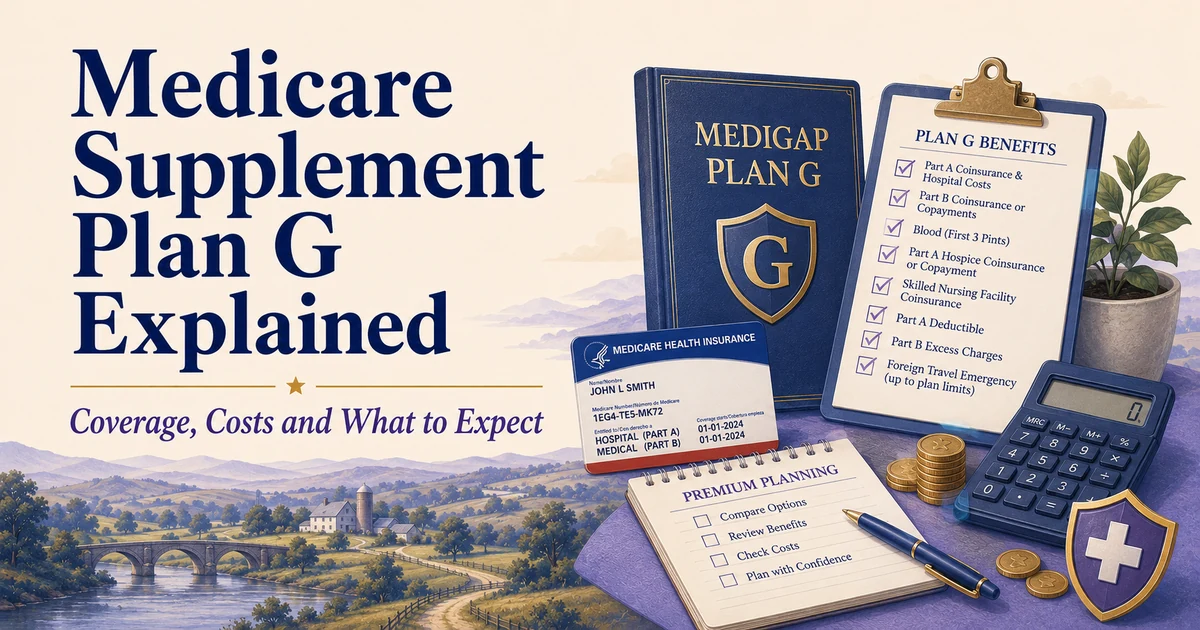
Quick answer: Standard Medicare Supplement Plan G pays the Part A deductible and most other standardized Part A and Part B cost sharing after Original Medicare pays. It also covers Part B excess charges and includes limited foreign-travel emergency coverage. It does not pay the annual Medicare Part B deductible, and it does not include outpatient prescription drug coverage.
What Is Medicare Supplement Plan G?
Plan G is a standardized Medicare Supplement, or Medigap, policy sold by private insurance companies. It is designed to work alongside Original Medicare, not replace it. Medicare processes an approved Part A or Part B claim first, and Plan G then pays the standardized share assigned to the policy.
In most states, one company’s standard Plan G has the same medical benefits as another company’s standard Plan G. The company can still differ in premium, rating method, discounts, underwriting rules, service and rate history. Massachusetts, Minnesota and Wisconsin standardize Medigap differently, so their plan designs do not follow the same lettered structure.
Original Medicare stays primary
You keep Medicare Part A and Part B. Plan G supplements the Medicare-approved claim.
Benefits are standardized
In most states, the core Plan G medical benefits do not change from one carrier to another.
Premiums are not standardized
Two carriers can charge different premiums for the same standardized Plan G benefits.
What Does Medicare Supplement Plan G Cover?
For Medicare-approved care, standard Plan G covers the major standardized gaps below:
Hospital and Part A benefits
- Part A coinsurance and hospital costs, including up to 365 additional days after Medicare benefits are used
- Part A inpatient deductible
- Part A hospice coinsurance or copayments
- Skilled nursing facility care coinsurance
Medical and other benefits
- Part B coinsurance or copayments after the Part B deductible
- The first three pints of blood
- Part B excess charges
- 80% of qualifying foreign-travel emergency costs, subject to the plan’s limits
Why people call Plan G comprehensive: After you satisfy the annual Part B deductible, standard Plan G can leave very little routine Medicare-approved Part A and Part B cost sharing for the policyholder.
What Does Plan G Leave You to Pay?
The main standardized Medicare-covered gap that Plan G does not pay is the annual Part B deductible. Once that deductible is met, Plan G generally pays the Part B coinsurance or copayment amounts covered by the policy.
You also remain responsible for your Medicare Part B premium, the Plan G premium, and any separate Part D premium. Plan G does not make services covered when Original Medicare does not cover them.
Plan G does not include
- The annual Part B deductible
- Routine outpatient prescription drug coverage
- Most routine dental, vision and hearing care
- Long-term custodial care
- Private-duty nursing
Coverage people often add
Someone using Original Medicare with Plan G generally compares a separate Medicare Part D plan for outpatient prescriptions. Dental, vision or hearing coverage may require separate coverage or direct payment.
How Does Plan G Work With Original Medicare?
1. Medicare processes the claim
For a covered service, Original Medicare determines whether the claim is approved and pays its share first.
2. Plan G pays its share
The Medigap carrier receives the Medicare claim information and pays the standardized Plan G benefit that applies.
3. You pay the remaining responsibility
That can include the Part B deductible, premiums and services that Original Medicare does not cover.
4. No ordinary HMO/PPO network
A standard Plan G generally works with U.S. providers that accept Medicare rather than using a local managed-care network.
This provider flexibility is one of the biggest structural differences between Medigap and Medicare Advantage.
Can You Use Plan G Anywhere in the United States?
A standard Plan G generally follows Original Medicare. If a U.S. doctor or facility accepts Medicare and is willing to treat you, the Plan G policy can generally supplement the Medicare-approved claim without a separate local Plan G network.
Important: Provider participation in Medicare still matters. Medicare SELECT policies are also an exception and can require specified hospitals or providers for full supplemental benefits.
This structure can be useful for frequent travelers, snowbirds and people who see specialists outside their home community. Plan G also includes a limited foreign-travel emergency benefit, but that is not the same as comprehensive international health insurance.
What Is High-Deductible Plan G?
Some states and carriers offer a high-deductible Plan G. It has the same general category of standardized benefits, but the policy does not begin paying those benefits until you have paid the annual high deductible for Medicare-covered costs. For 2026, the federal high-deductible amount for Plan G is $2,950.
Standard Plan G
Usually has a higher monthly premium but begins paying its standardized benefits without the separate high-deductible threshold.
High-deductible Plan G
Can have a lower premium, but you accept substantially more upfront Medicare-covered cost exposure before the policy begins paying.
Do not compare the two using monthly premium alone. Compare the annual premium difference, the high deductible and your ability to absorb a higher-cost year.
How Is Plan G Different From Plan N?
Plan G and Plan N both leave the Part B deductible to the policyholder, but Plan N can leave several additional Part B costs behind in exchange for a potentially lower premium.
| Feature | Plan G | Plan N |
|---|---|---|
| Part B deductible | You pay it | You pay it |
| Certain office visits | No Plan G copay after deductible | Up to $20 |
| Certain ER visits without inpatient admission | No Plan G copay after deductible | Up to $50 |
| Part B excess charges | Covered | Not covered |
| Premium | Often higher | Often lower, but not always |
For the complete side-by-side decision, see Medicare Supplement Plan G vs. Plan N. For a Plan N-only explanation, see What Is Medicare Supplement Plan N?
When Can You Buy Medicare Supplement Plan G?
You can apply for Plan G when it is offered in your market, but your right to buy it without medical underwriting depends on timing and applicable state or federal protections.
Medigap Open Enrollment
Your one-time federal six-month Medigap Open Enrollment Period generally begins when you are at least 65 and enrolled in Part B. This is usually the strongest time to buy any Medigap plan offered to you.
Guaranteed-issue rights
Certain coverage losses and other protected situations can give you a federal or state right to buy specified Medigap coverage without medical underwriting.
Medical underwriting
Outside a protected window, a carrier may be allowed to review health information before approving the application, depending on state law and the situation.
What Determines the Price of Plan G?
The benefits may be standardized, but the premium is not. Plan G prices can vary by carrier and applicant even within the same ZIP code.
- Age and the carrier’s rating method
- ZIP code or rating area
- Gender and tobacco status where permitted
- Household, payment or other available discounts
- The carrier’s approved rate structure and rate history
- Whether you are comparing standard or high-deductible Plan G
Compare like with like: Once you decide on standard Plan G, every quote should be for the same standardized Plan G benefit package. Then compare premium, discounts, rating method, service and longer-term pricing history.
See Medigap Premium Rating Methods for attained-age, issue-age and community-rated pricing.
Who Might Prefer Plan G?
Plan G may fit if you:
- Want broad access to Medicare-participating providers
- Prefer fewer routine bills after the Part B deductible
- Want protection from Part B excess charges
- Travel frequently within the United States
- Value predictable cost sharing more than the lowest possible premium
Another option may fit if you:
- Prefer a lower premium and are comfortable with limited copays
- Want bundled extras available through some Medicare Advantage plans
- Are comfortable using a plan network
- Find the Plan G premium too high for the value you expect to use
Plan G is not automatically better than Plan N or Medicare Advantage. The best fit depends on the actual premiums available to you, how you use care, provider preferences, travel and how much financial variability you are willing to accept.
Medicare Supplement Plan G Questions
Does Plan G cover the Medicare Part B deductible?
No. Standard Plan G does not cover the annual Part B deductible.
Does Plan G cover the Medicare Part A deductible?
Yes. Standard Plan G covers 100% of the Part A deductible.
Does Plan G cover Part B excess charges?
Yes. Standard Plan G covers Part B excess charges when they apply.
Does Plan G include prescription drug coverage?
No. Modern Medigap policies do not include outpatient prescription drug coverage. Someone using Plan G generally evaluates a separate Part D plan.
Does Plan G have a provider network?
A standard Plan G generally does not use a local HMO or PPO network. It works with Original Medicare and generally follows Medicare provider participation. Medicare SELECT policies are an exception.
Is Plan G the same from every company?
In most states, the core medical benefits of standard Plan G are the same from company to company. Premiums, discounts, service, underwriting and rate history can differ. Massachusetts, Minnesota and Wisconsin use different Medigap standardization systems.
Can I switch to Plan G later?
You can apply, but outside a protected enrollment or guaranteed-issue right, medical underwriting may apply depending on state law and your situation. Do not cancel existing coverage until the new policy is approved and its effective date is confirmed.
Independent Medicare guidance
Compare Medicare Supplement Plan G Options
Thompson Medicare Brokerage can help you compare Plan G premiums and carrier options we represent, review Plan G against Plan N or Medicare Advantage, and check how enrollment timing may affect your choices in Missouri and Illinois. Consultations are no-cost and no-obligation.
Thompson Medicare Brokerage is a non-government insurance agency. This page provides general educational information. Policy availability, premiums, underwriting, eligibility and enrollment rights vary by applicant, carrier, state and effective date. Medicare Supplement plans do not replace Original Medicare.