
Medigap Cost Guide
Why Medicare Supplement Premiums Increase: Attained-Age, Issue-Age and Community-Rated
The rating method explains how age is built into a Medigap premium. It does not freeze the price or predict which carrier will be least expensive long term.
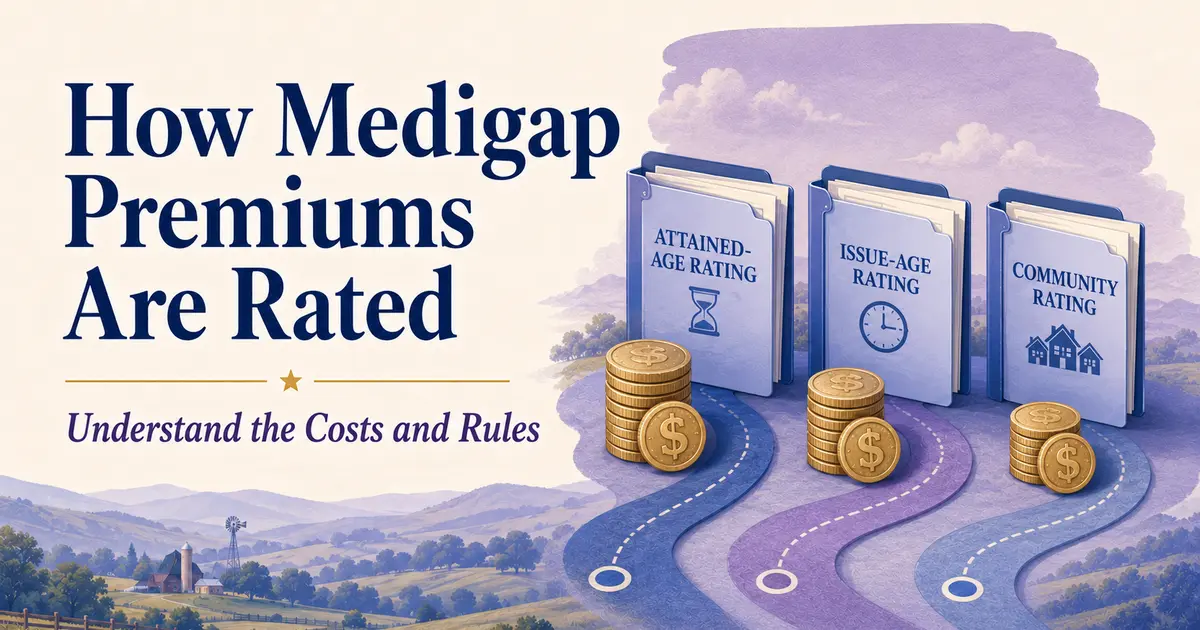
Quick answer: Medigap policies are generally priced as community-rated, issue-age-rated or attained-age-rated. Only attained-age pricing increases specifically as you get older, but premiums under all three methods can still rise because of inflation and other approved factors.
How Are Medicare Supplement Premiums Rated?
| Rating method | How age is used | What can happen later |
|---|---|---|
| Community-rated | The base premium generally is not based on your age. | It can still increase because of inflation and other factors. |
| Issue-age-rated | The premium is based on your age when the policy is issued. | It does not increase merely because you age, but other increases can apply. |
| Attained-age-rated | The premium is based on your current age. | It can increase as you age and because of inflation or other factors. |
Rating method is one part of the price. Location, plan letter, company, tobacco status, discounts, underwriting and other permitted factors can also affect the premium.
Why Can Community- or Issue-Age Premiums Still Increase?
“Not based on age” does not mean “never increases.” Medical costs, utilization, inflation, changes in Medicare cost sharing, the policy block’s claims experience and other approved rating factors can affect premiums.
Medical inflation
Hospital, physician, outpatient and other healthcare costs can increase over time.
Claims experience
The cost of claims within the applicable policy pool can influence requested rates.
Discount changes
A household, payment or introductory discount may change, expire or no longer apply.
A company’s past rate history can provide context, but it cannot guarantee future increases. A low first-year premium can still change later.
Does Attained-Age Pricing Always Cost More?
No. An attained-age policy may start with a competitive premium, and another rating method can still have substantial non-age increases. The label alone does not identify the lowest current or long-term cost.
The useful question is how the carrier applies age increases, how frequently the age band changes, and how the total premium compares at your current age. Ask for the policy’s actual rating explanation rather than assuming every attained-age policy increases on a birthday.
What Should You Ask Before Buying?
- Which rating method does this exact policy use?
- If attained-age-rated, when and how does age change the rate?
- Has this policy form had premium increases during the last several years?
- Which discounts are included in the quote, and can they change?
- Is the quote for the same standardized plan letter and effective date?
- Does the carrier charge differently for tobacco status, household status or payment method?
- Would changing later require underwriting?
Compare the same plan letter across carriers. A lower-benefit plan is not a like-for-like rate comparison even if the monthly premium is lower.
What Can You Do About a Medigap Premium Increase?
A rate increase is a reason to review the policy, but it does not create a universal federal right to buy any other Medigap policy without medical underwriting. Use a replacement process that protects the coverage you already have.
- Read the carrier notice. Identify the new premium, effective date and whether a household, payment or other discount changed.
- Compare like for like. Start with the same standardized plan letter, effective date and applicant information across available carriers. A cheaper plan letter is not an equivalent-benefit comparison.
- Identify your enrollment right before applying. Determine whether you are in Medigap Open Enrollment, have a federal guaranteed-issue right or qualify for a state-specific switching protection. Otherwise, the new carrier may use medical underwriting, charge more or decline the application where permitted.
- Apply before canceling. Complete the new carrier’s application honestly and keep the current policy active while the application is reviewed.
- Confirm approval and timing in writing. Verify the exact policy, premium and effective date before coordinating any termination of the old policy.
- Use the 30-day free-look period carefully. When replacing one Medigap policy with another, Medicare says you can decide during the first 30 days whether to keep the new policy. You must pay both premiums during that overlap.
Do not cancel your current Medigap policy just to apply elsewhere. Wait until the replacement is approved, confirm its effective date and follow the insurers’ instructions. If the new policy is not issued or you decide not to keep it during the free-look period, canceling too early could leave you without the coverage you intended to retain.
Missouri’s Medigap Anniversary Rule and Illinois’s Medigap Birthday Rule can provide additional opportunities for certain policyholders, but each has eligibility, timing and replacement limits. They are not open-ended rights to buy any plan from any company.
Reducing benefits can lower premiums, but moving back to richer coverage later may require underwriting. Consider the long-term tradeoff before changing plan letters.
Medigap Premium Questions
Can my Medigap premium increase every year?
It can increase when the carrier receives any required approval and applies the policy’s rating rules. Frequency and reasons vary by company, policy and state.
Which rating method is best?
No method is automatically best. Compare actual premiums, age treatment, discounts, rate history and future switching options.
Does issue-age mean my premium is locked forever?
No. The policy does not increase merely because you get older, but inflation and other approved factors can still raise the premium.
Does community-rated mean everyone pays exactly the same?
Medicare describes the base premium as generally the same regardless of age, but permitted discounts, location and other factors can still affect what an individual pays.
Can I switch after a rate increase?
You can apply, but a premium increase by itself does not create a universal federal guaranteed-issue right. Medical underwriting may apply unless you are in Medigap Open Enrollment, have a federal guaranteed-issue right or qualify under a state protection. Missouri and Illinois have additional rules for certain changes.
Official Sources
- Medicare: Choosing a Medigap Policy
- Medicare: Get Medigap Costs
- Medicare: Can I Change My Medigap Policy?
- Medicare: Medigap Basics
Reviewed against official Medicare guidance on August 28, 2026. Medigap premiums, underwriting practices and state switching rights can change; verify the rules that apply before replacing coverage.
Independent Medicare guidance
Compare Medicare Supplement Options
Thompson Medicare Brokerage can help you compare plan benefits, premiums, enrollment rights and carrier options in Missouri and Illinois. Consultations are no-cost and no-obligation.
Thompson Medicare Brokerage is a non-government insurance agency. This page provides general educational information. Policy availability, premiums, underwriting, eligibility and enrollment rights vary by applicant, carrier, state and effective date.